Personalized Foot Pain Relief and Custom Orthotics in Michigan
At Fix My Feet, we help people find lasting relief from foot, heel, knee, hip, and lower back pain by addressing the underlying alignment and biomechanical issues that may be causing their discomfort.
Our experienced foot care and orthotic specialists work with customers experiencing conditions such as plantar fasciitis, bunions, hammer toes, fallen arches, flat feet, heel pain, overpronation, and tired or aching feet. Whether discomfort is affecting your work, exercise, or everyday activities, we can help you find a personalized solution designed to improve comfort, balance, and mobility.
Find the Root Cause of Your Pain—and Get Relief That Lasts
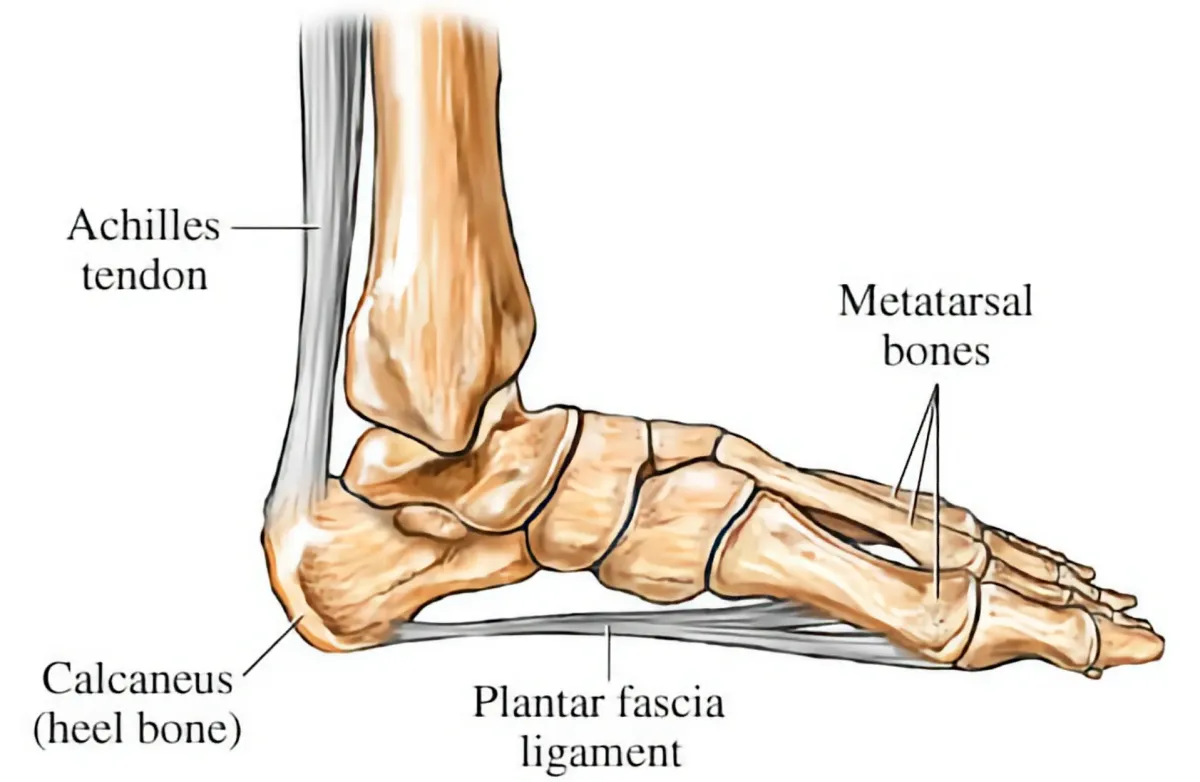
Foot, heel, leg, knee, hip, back, and even neck pain can sometimes begin with the way your feet support and move your body. When your arches are not properly supported, or your feet are out of alignment, the effects can travel upward through your ankles, knees, hips, and spine.
At Fix My Feet, we help people throughout Michigan find personalized solutions for plantar fasciitis, heel pain, fallen arches, flat feet, bunions, tired or aching feet, and foot-related knee, hip, and back pain.
Why Do Your Feet Hurt?
Long hours of standing, walking, working, or exercising can place repeated stress on your arches, heels, and joints. Improper footwear, uneven weight distribution, changes in your gait, arthritis, and other health-related factors may also contribute to ongoing discomfort.
Plantar fasciitis is one of the most common causes of heel pain, but it is not the only possibility. That is why treating the symptoms alone may provide only temporary relief.
How Does Fix My Feet Identify the Cause of Your Pain?
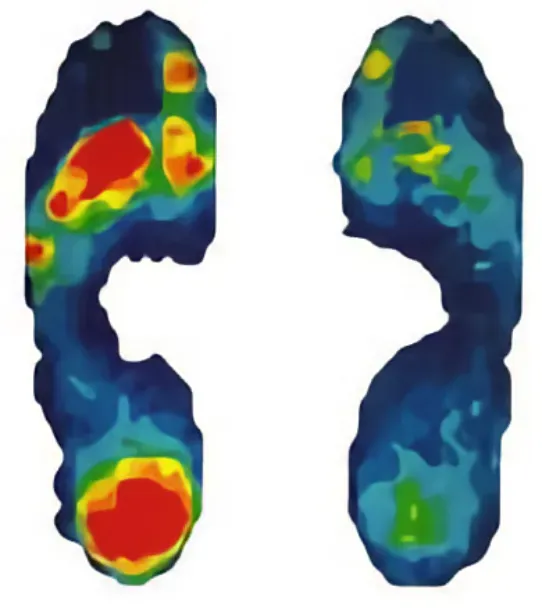
Our experienced foot care and orthotic fitting specialists evaluate how your feet support your body and move throughout each step. Using foot scanning technology and a detailed personal consultation, we identify pressure points, arch imbalances, and alignment concerns that may be contributing to your pain.
We then recommend a personalized solution using properly fitted arch supports, premium orthotic inserts, and supportive footwear options selected for your unique foot structure, lifestyle, occupation, and daily activities.
Can Arch Supports and Orthotic Inserts Help?
Properly fitted arch supports and orthotic inserts may help:
Reduce pressure on painful areas of the feet
Support weakened, fallen, or unstable arches
Improve balance and weight distribution
Promote healthier foot and lower-body alignment
Reduce strain on the heels, ankles, knees, hips, and back
Make standing, walking, working, and exercising more comfortable
The goal is not simply to cover up your discomfort. It is to address the underlying mechanical imbalances that may be causing it.
Better support. Improved alignment. Greater comfort. Long-lasting relief.
For more than 20 years, Fix My Feet has helped people across Michigan move more comfortably and return to the activities they enjoy. Schedule your personalized foot evaluation and take the first step toward finding the right solution for your pain.
We Can Help With Plantar Fascitis and These Common Conditions As Listed Below:
Plantar Fasciitis & Heal Pain
What Is Plantar Fasciitis?
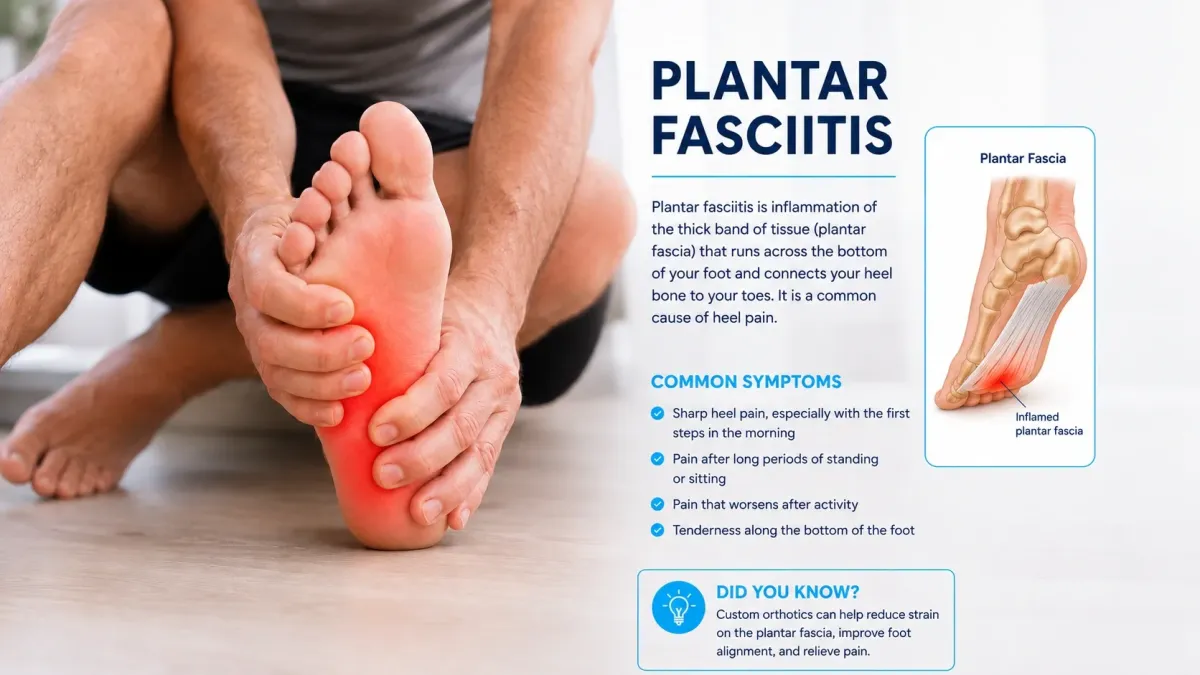
Plantar fasciitis is a common cause of sharp heel pain, especially during your first steps in the morning or after sitting for an extended period. The discomfort may ease as you begin moving but often returns after walking, running, standing, or resting.
The condition develops when repeated stress creates tiny tears in the plantar fascia—the strong band of tissue supporting the arch of your foot. Flat feet, poor arch support, prolonged standing, running, improper footwear, and sudden weight gain can all increase your risk.
Properly fitted arch supports, or orthotic inserts, can reduce strain, improve foot alignment, and help relieve plantar fasciitis pain.
Top 4 Symptoms of Plantar Fasciitis
Sharp or stabbing pain beneath the heel
Intense heel pain with your first steps in the morning
Pain after sitting or resting for an extended period
Heel pain that worsens after prolonged standing, walking, or exercise

Did you know?
Custom orthotics can help reduce strain on the plantar fascia, improve foot alignment, and relieve pain.
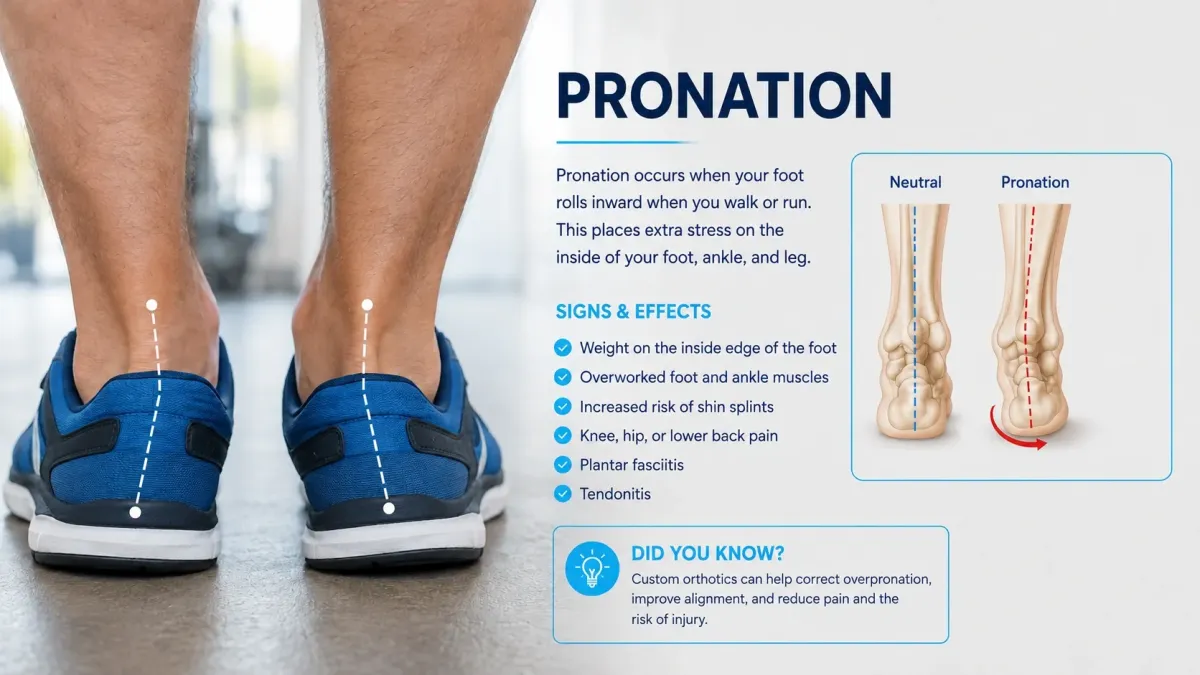
Pronation
What Is Pronation?
Pronation occurs when the foot and ankle roll inward too far while standing or walking, causing the arch to flatten and affecting overall alignment. Overpronation can place added stress on the feet, ankles, knees, hips, and lower back. Supportive footwear and properly fitted orthotic inserts may improve alignment, reduce strain, and relieve discomfort.
Top 4 Signs of Overpronation
Feet or ankles noticeably rolling inward
Flattened or fallen arches when standing
Uneven shoe wear along the inside edges
Recurring foot, ankle, knee, hip, or lower-back pain
Did you know?
Custom orthotics can help correct overpronation, improve alignment, and reduce pain and the risk of injury.
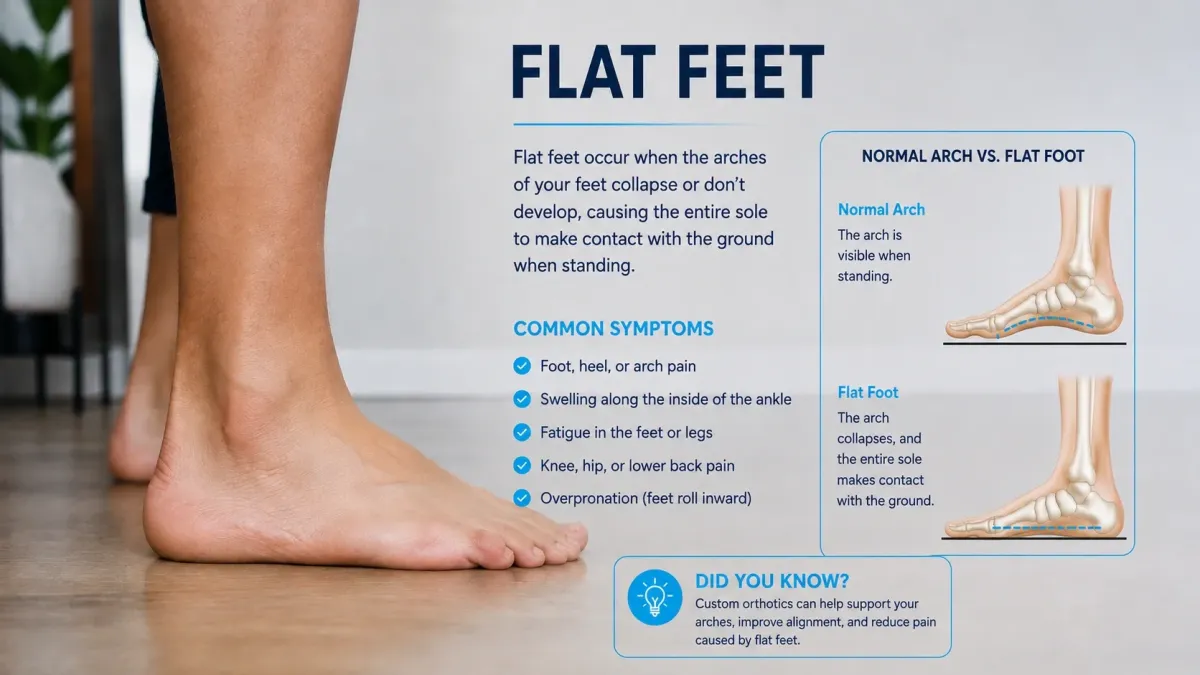
Flat Feet / Fallen Arches
What Are Flat Feet or Fallen Arches?
Flat feet, also called fallen arches, occur when the arches flatten while standing, allowing most or all of the foot to contact the floor. This can affect foot and ankle alignment and may contribute to pain in the feet, ankles, knees, hips, or lower back. Properly fitted arch supports or orthotic inserts may provide support, improve alignment, and reduce discomfort.
Top 4 Signs of Flat Feet or Fallen Arches
Little or no visible arch when standing
Foot or arch pain after walking or standing
Feet and ankles rolling inward
Tired, aching feet or recurring ankle and knee discomfort
Did you know?
Custom orthotics can help support your arches, improve alignment, and reduce pain caused by flat feet.
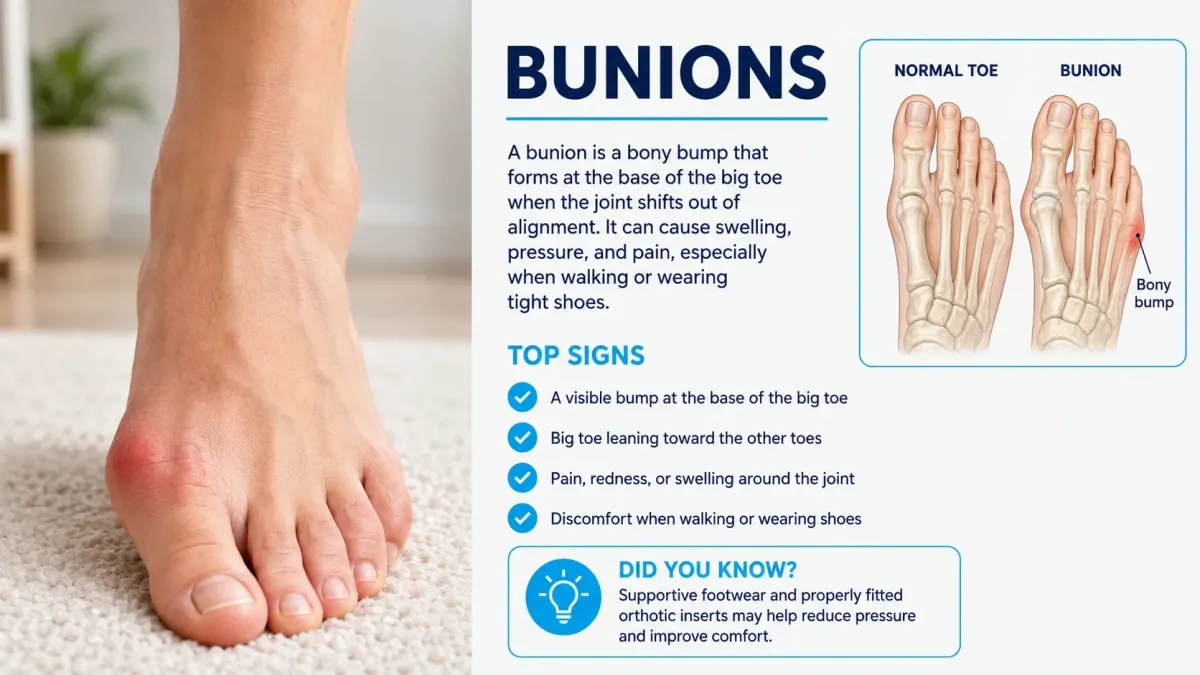
Bunions
What Is a Bunion?
A bunion is a bony bump that forms at the base of the big toe when the joint shifts out of alignment. It can cause swelling, pressure, and pain, especially when walking or wearing tight shoes. Supportive footwear and properly fitted orthotic inserts may help reduce pressure and improve comfort.
Top 4 Signs of a Bunion
Pain surrounding the joint
Irritated, sensitive skin surrounding the area
Stiffness and cramping of the big toe
Callus formation on the underside of the joint at the big toe
Did you know?
Supportive footwear and properly fitted orthotic inserts may help reduce pressure and improve comfort.
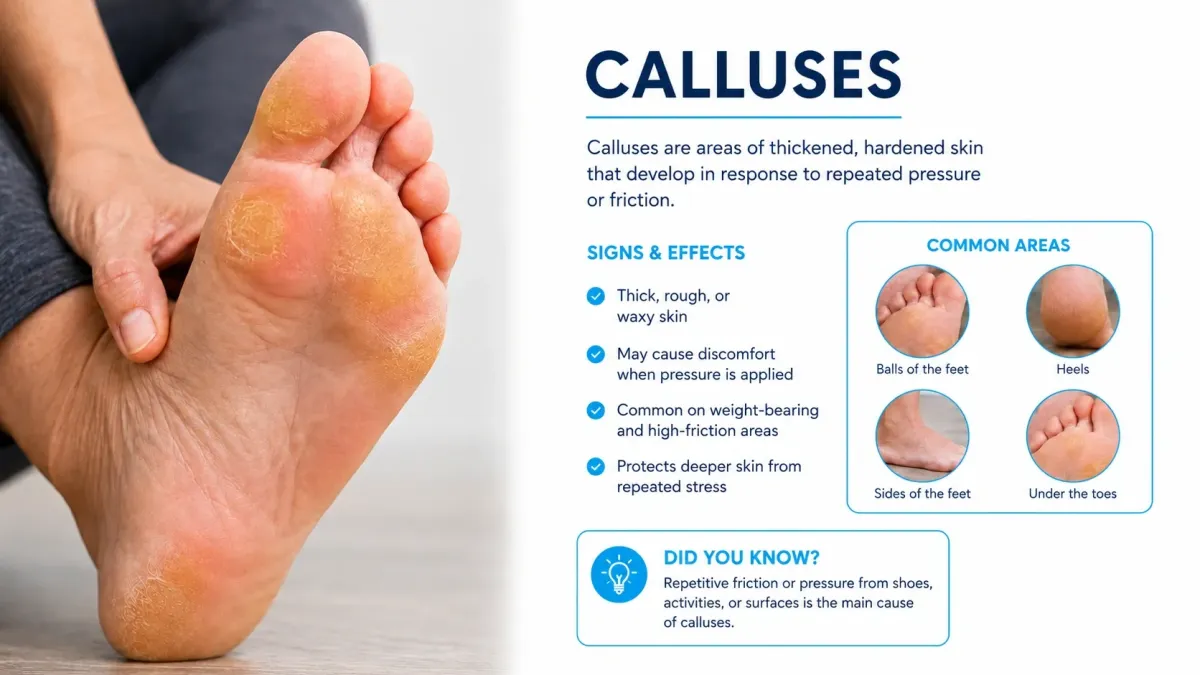
Calluses
What Are Foot Calluses?
Foot calluses are thick, hardened areas of skin that develop from repeated pressure or friction. They commonly form on the heels, balls of the feet, or toes due to tight footwear, prolonged standing, or uneven weight distribution. Proper footwear and supportive orthotic inserts may help reduce pressure and prevent recurring calluses.
Top 4 Signs of Foot Calluses
A thick, hardened patch of skin
Rough, dry, or flaky skin
Tenderness or discomfort under pressure
Pain while standing, walking, or wearing shoes
Did you know?
Repetitive friction or pressure from shoes, activities, or surfaces is the main cause of calluses.
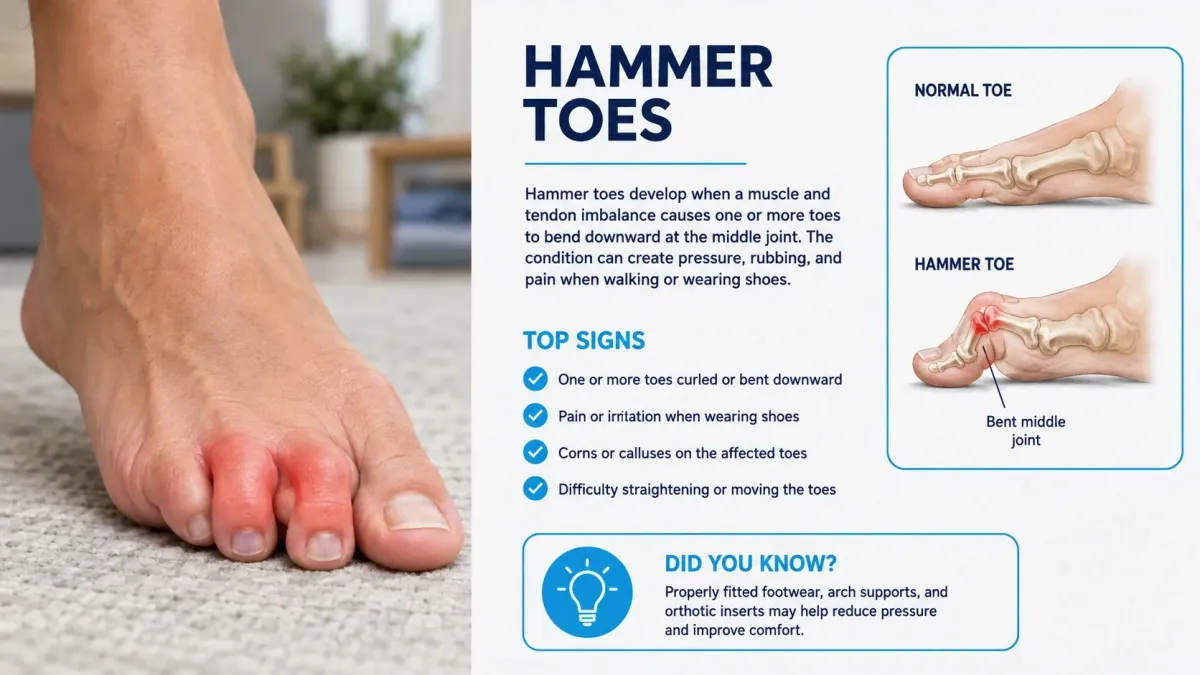
Hammer Toes
What Are Hammer Toes?
Hammer toes develop when a muscle and tendon imbalance causes one or more toes to bend downward at the middle joint. The condition can create pressure, rubbing, and pain when walking or wearing shoes. Properly fitted footwear, arch supports, and orthotic inserts may help reduce pressure and improve comfort.
Top 4 Signs of Hammer Toes
One or more toes curled or bent downward
Pain or irritation when wearing shoes
Corns or calluses on the affected toes
Difficulty straightening or moving the toes
Did you know?
Properly fitted footwear, arch supports, and orthotic inserts may help reduce pressure and improve comfort.
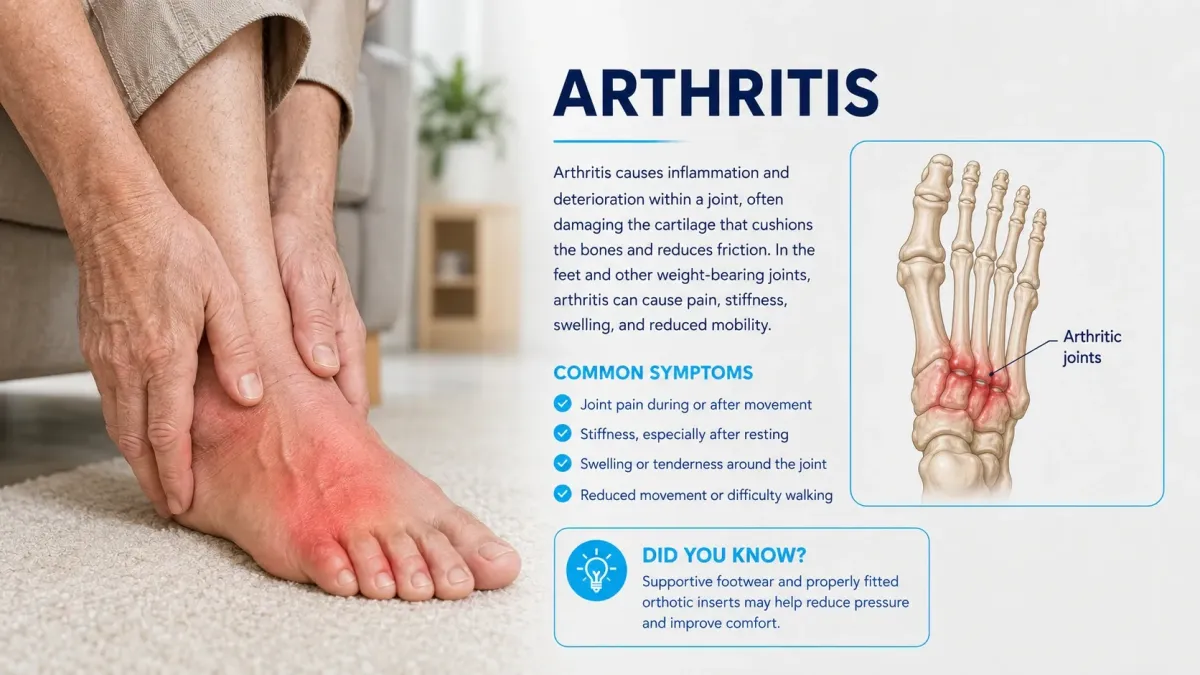
Arthritis
What Is Arthritis?
Arthritis causes inflammation and deterioration within a joint, often damaging the cartilage that cushions the bones and reduces friction. In the feet and other weight-bearing joints, arthritis can cause pain, stiffness, swelling, and reduced mobility. Supportive footwear and properly fitted orthotic inserts may help reduce pressure and improve comfort.
Top 4 Signs of Arthritis
Joint pain during or after movement
Stiffness, especially after resting
Swelling or tenderness around the joint
Reduced movement or difficulty walking
Did you know?
Supportive footwear and properly fitted orthotic inserts may help reduce pressure and improve comfort.
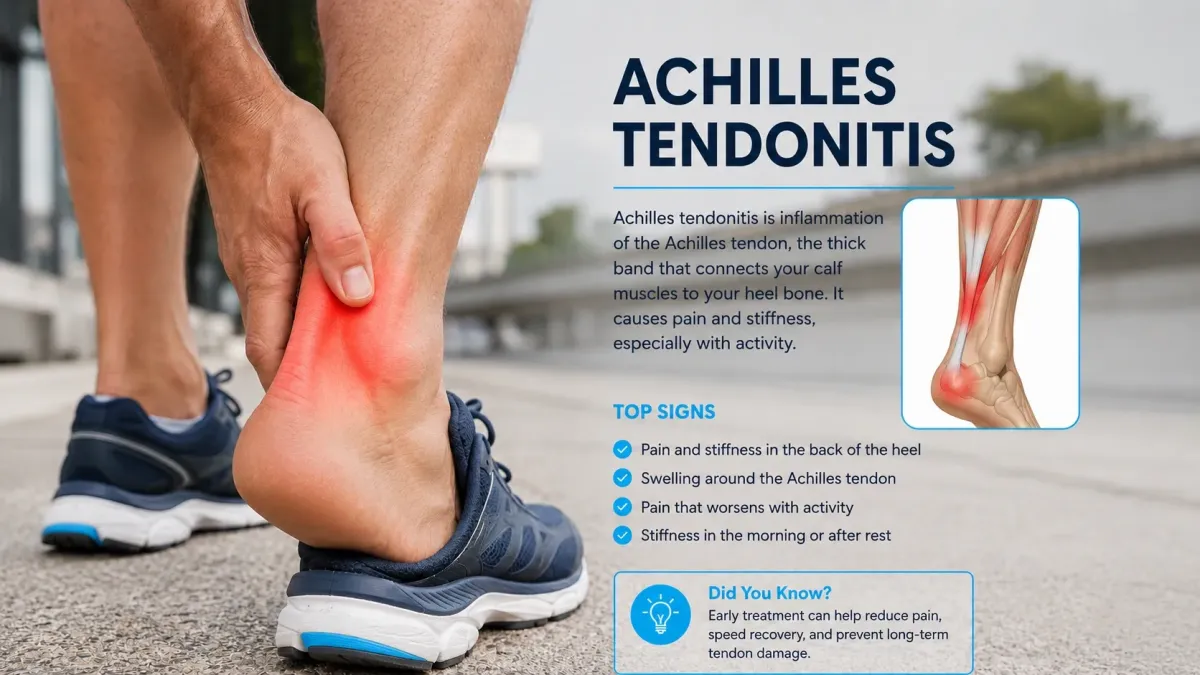
Achilles Tednontis
What Is Achilles Tendinitis?
Achilles tendinitis occurs when the tendon connecting the calf muscles to the heel becomes irritated from overuse or repetitive strain. It commonly causes pain and stiffness at the back of the heel, especially during walking, running, or climbing stairs. Supportive footwear and properly fitted orthotic inserts may help reduce strain and improve comfort.
Top 4 Signs of Achilles Tendinitis
Pain or tenderness at the back of the heel
Stiffness that is worse in the morning
Swelling or thickening around the Achilles tendon
Pain that increases during walking, running, or climbing stairs
Did you know?
Early treatment can help reduce pain, speed recovery, and prevent long-term tendon damage.
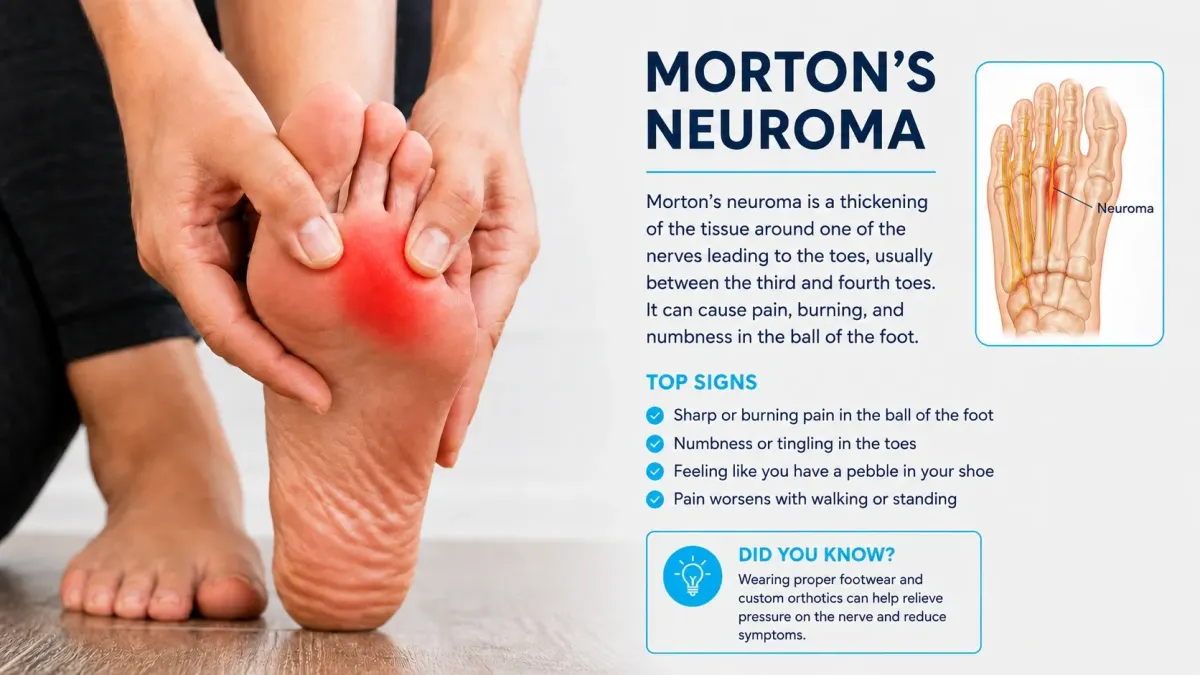
Morton's Neuroma
What Is Morton’s Neuroma?
Morton’s neuroma occurs when tissue around a nerve in the ball of the foot becomes irritated and thickened, most often between the third and fourth toes. It can cause sharp, burning pain that worsens when walking or wearing tight or high-heeled shoes. Proper footwear and fitted orthotic inserts may help reduce pressure on the affected nerve.
Top 4 Signs of Morton’s Neuroma
Sharp or burning pain in the ball of the foot
Tingling or numbness extending into the toes
Feeling like a pebble is inside your shoe
Pain that worsens in tight shoes or while walking
Did you know?
Wearing proper footwear and custom orthotics can help relieve pressure on the nerve and reduce symptoms.
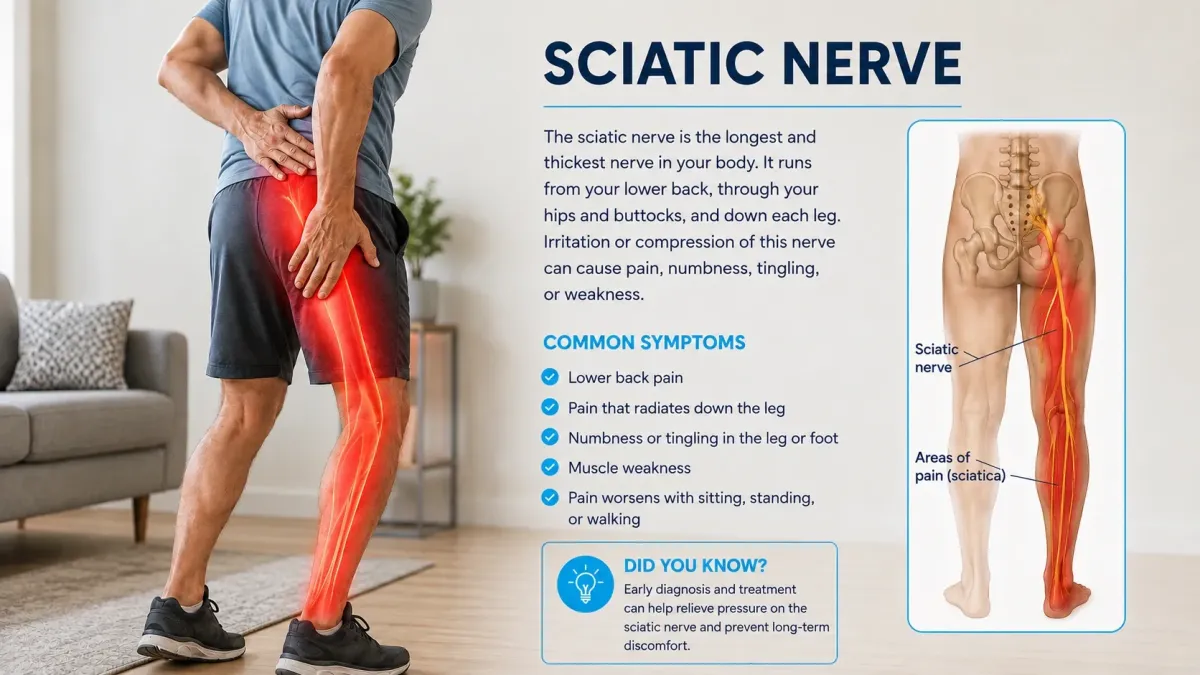
Sciatic Nerve
What Is Sciatic Nerve Pain?
Sciatic nerve pain, or sciatica, occurs when a nerve in the lower back becomes compressed or irritated. Pain may travel from the lower back through the buttock and down one leg. Poor posture or body alignment may increase strain, but sciatica is most often associated with a spinal disc or bone pressing on a nerve.
Top 4 Signs of Sciatica
Sharp or burning pain from the lower back into one leg
Pain traveling through the buttock or back of the thigh
Tingling or numbness in the leg or foot
Weakness in the affected leg or foot
Did you know?
Early diagnosis and treatment can help relieve pressure on the sciatic nerve and prevent long-term discomfort.
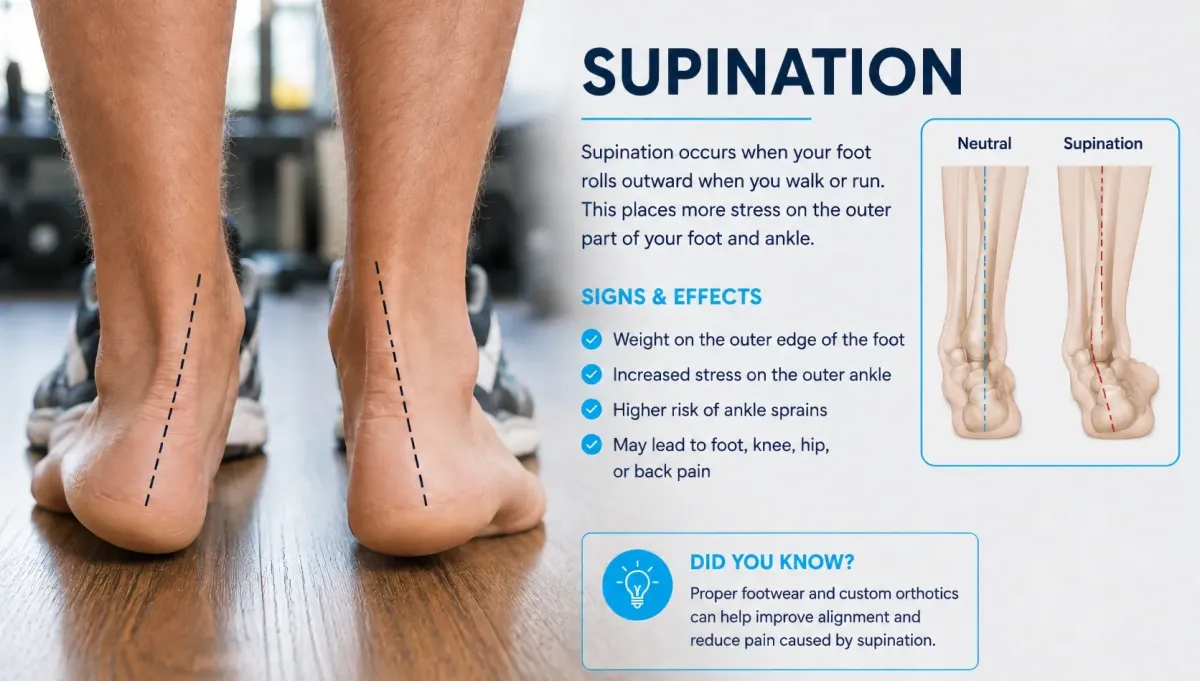
Supination
What Is Supination?
Supination, also called underpronation, occurs when the foot rolls outward while standing or walking, placing extra pressure along the outside edge of the foot. It is often associated with high arches and can reduce shock absorption, affect balance, and contribute to foot, ankle, knee, or hip pain. Properly fitted footwear and orthotic inserts may improve stability and distribute pressure more evenly.
Top 4 Signs of Supination
Excessive wear along the outside edge of your shoes
High or rigid arches
Feet and ankles rolling outward while walking
Recurring ankle instability or pain along the outside of the foot
Did you know?
Proper footwear and custom orthotics can help improve alignment and reduce pain caused by supination.
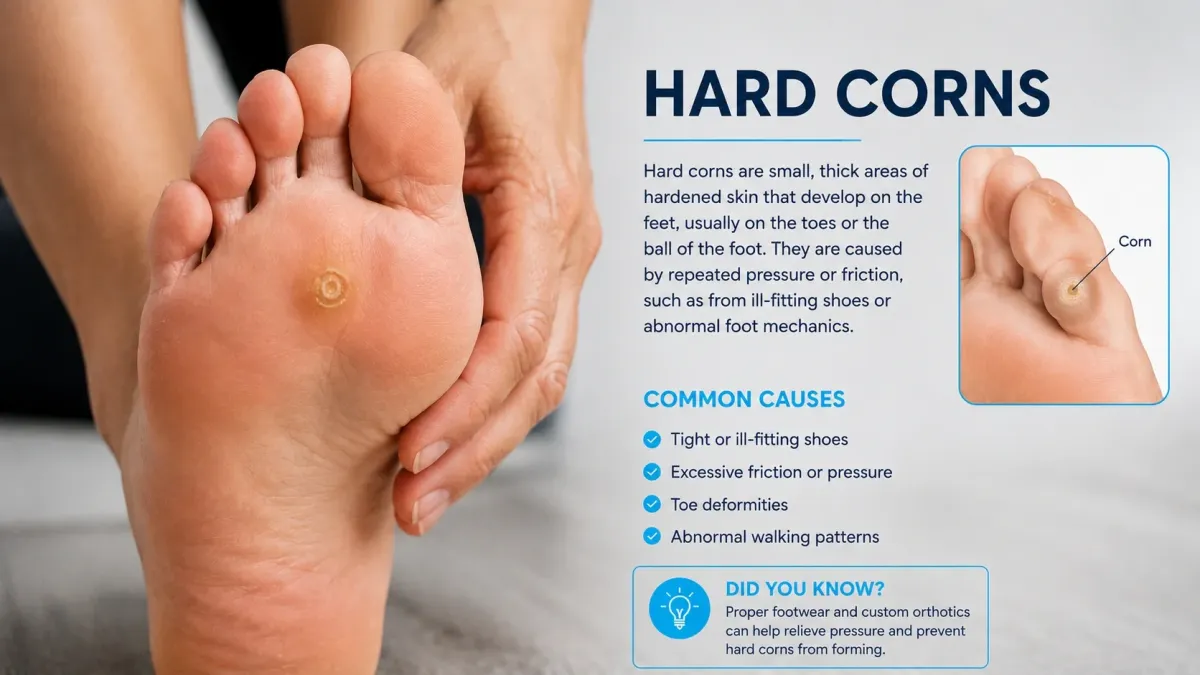
Hard Corns
What Are Hard Corns?
Hard corns, also called heloma durum, are small, dense areas of thickened skin caused by repeated pressure or friction. They commonly develop on the tops or tips of the toes and along the sides of the feet, often from tight shoes, toe deformities, or uneven pressure. Properly fitted footwear and orthotic support may help reduce friction and prevent recurrence.
Top 4 Signs of Hard Corns
A small, round area of thick, hardened skin
A firm central core
Pain or tenderness when pressed
Discomfort while walking or wearing shoes
Did you know?
Proper footwear and custom orthotics can help relieve pressure and prevent hard corns from forming.
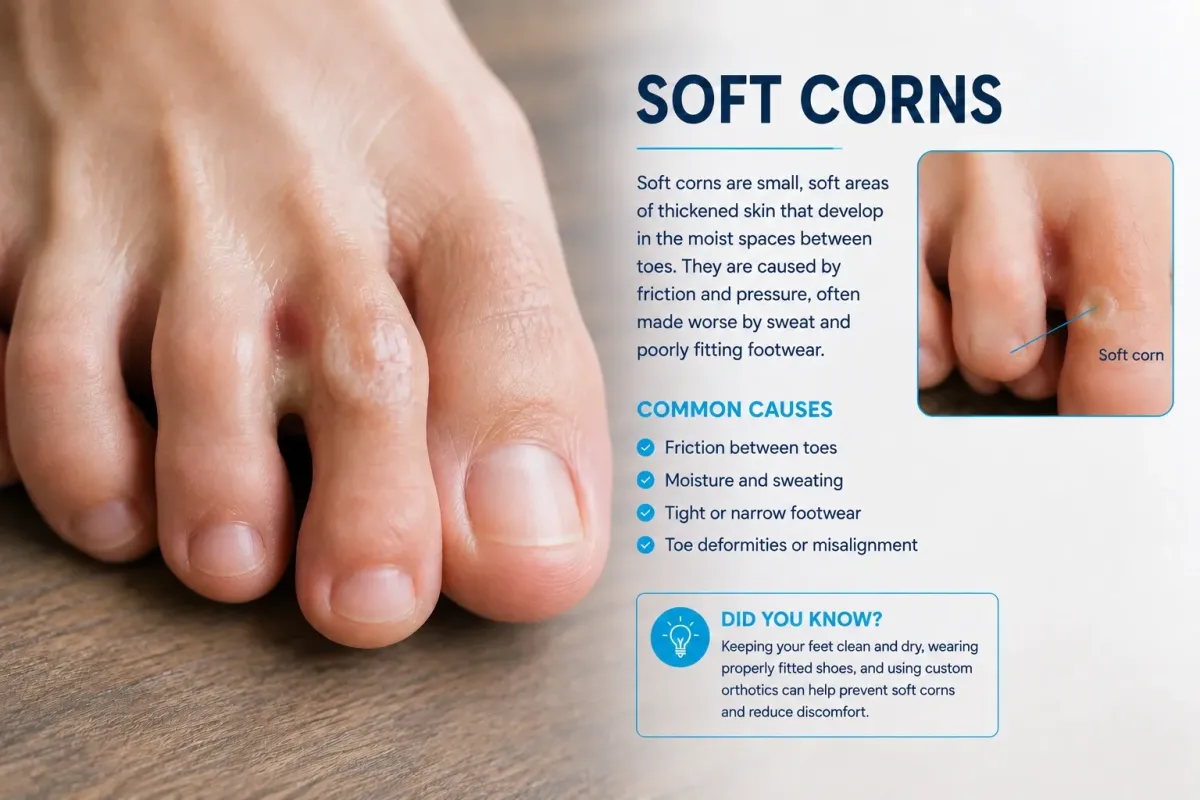
Soft Corns
What Are Soft Corns?
Soft corns, also called heloma molle, are moist, rubbery areas of thickened skin that usually develop between the fourth and fifth toes. They form when toes repeatedly rub together, often because of tight footwear, toe alignment, or excess moisture. Roomier shoes, toe spacing, and properly fitted orthotic support may help reduce pressure and prevent recurrence.
Top 4 Signs of Soft Corns
A whitish, rubbery patch between the toes
Pain or tenderness when the toes press together
Moist, softened skin around the affected area
Discomfort when walking or wearing tight shoes
Did you know?
Keeping your feet clean an dry, wearing properly fitted shoes, and using custom orthotics can help prevent soft corns and reduce discomfort.
Customer Stories
Ready to Fix Your Feet?
Taking the first step is often the hardest. We are here to make it as simple and
comfortable as possible. Book your personalized assessment now to see if we're a good fit.
We offer several payment options for your convience.

Walk Better. Feel Better. Live Better.


Company
Michigan Locations
© 2026 Fix My Feet of Michigan. All rights reserved.